In the ongoing Vasby Labs experiment, where we are testing ideas on how development can occur with the participation of the community, we began with workshops held in the areas' shopping mall.
after a series of these public workshops, we began identifying the project as a series of questions, interspersed with temporary public installations, which would measure and test the participation of the public. In the summer and early fall sessions,
these included a pop-up grocery store, a temporary urban lab,
a propaganda stand, a cafe and a carousel for kids.
As darkness becomes a larger part of the day, we slowly begin to illuminate the area of Torget
Illuminations happens on two levels
one is a set of mobile street lights and lit objects,
that will brighten the area during the dark winter months
Parallel to the light objects, a series of signs introduce and advertise a questionaire
on the ways that the city can develop.
a set of string lights suggest a celebration or gathering. Benches are there to sit, and a sign asks whether people prefer public or private parks. These are perhaps questions with multiple answers, because privatising public space leads to better development but also more control on the part of investors.
(invitation to the switching-on of Lights, on Monday 12th of November 2012)
So the questions are there simply to introduce the subject,
and to make sure that decisions are well thought through.
later on, an ice-skating rink will operate with free entrance for the citizens of Vasby.
The area of Torget, which we are illuminating, is in fact a construction site, that we are temporarily using to test urban planing ideas before construction begins,
the time before construction is traditionally spent inside boardrooms and municipal offices high above the city
Recently I've been teaching a class on "The End of Design"
or how design practices are affected by our copy-paste+google-search mentality.
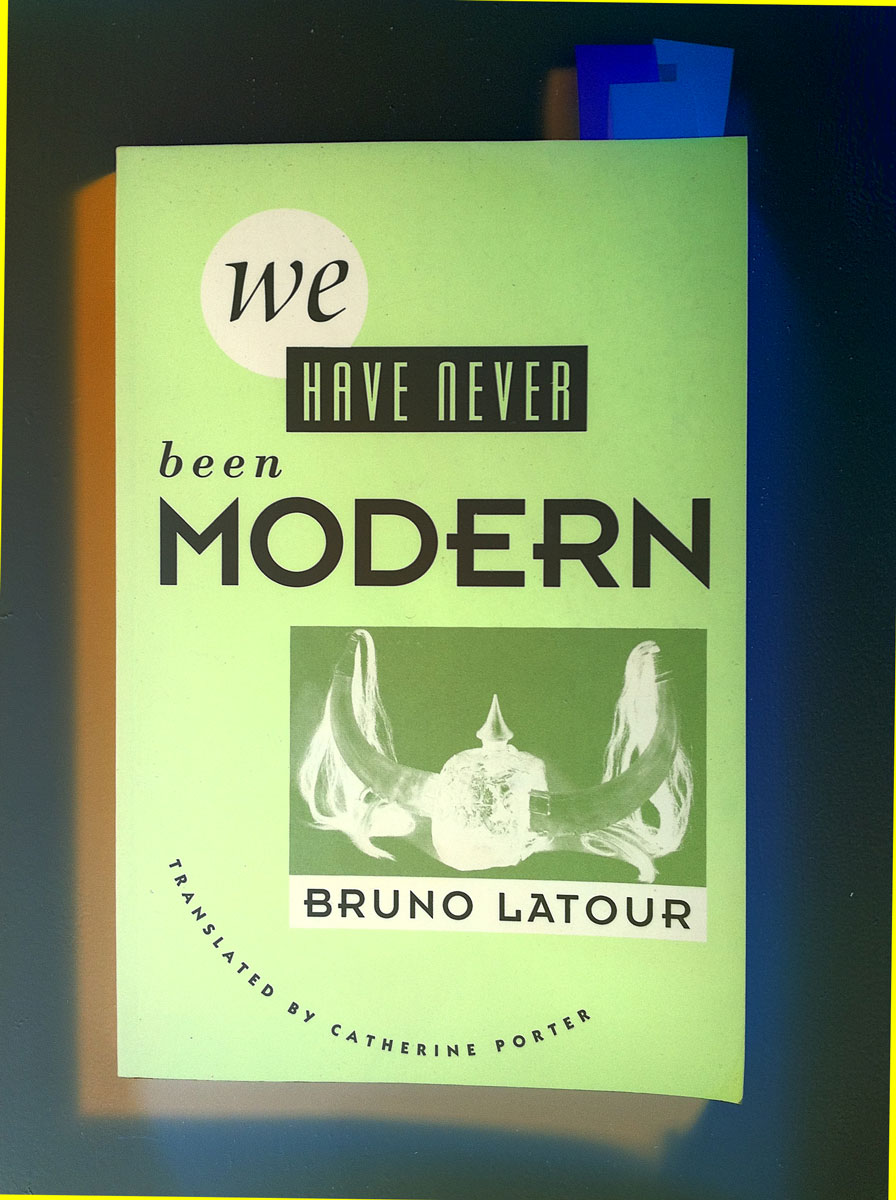
The class is based on a series of reading that trace the shift from old school capitalism
i.e. Modernism
We started by looking into the state of objects in a desire driven landscape
and move to the post modern condition and how it affects the citizen
but then comes the internet, and slowly becomes the simulation of the simulation
some tiny books are there as a historical re-think
Tom Holerts' excellent proposal for alternatives to current production modes
Social public space as opposed to consumer driven public space
a precise reading on how we shifted from the modern to the postmodern to the now
with some questions on modernity and identity along the way
an interview with Denise Scott Brown, just to re-trace postmodernism back to where it began and where it made sense
a study on the idea of crisis and resuscitation as a contemporary capitalist system (Crisis capitalism? Copy Capitalism?)
more questioning of how cultural production actually works
and yet some more words from DSB. And all along trying to pin down the class subject with a continuously updated set of questions
full texts here TheEndOfDesign
In the summer of 2007, on commission from Casa Vogue, I began researching the life of legendary gallerist Alexander Iolas, and his amazing Villa in the suburb of Agia Paraskevi.
the house was a surreal mix of contemporary art with moder with surrealism with minimalism with antiquities, baroque, fashion, furs, paraphernalia and eccentricities
as a conclusion to the Iolas research, I decided to sneak into the villa
, only to find a golden ruin
ripped gold wallpaper everywhere
gold stair leading nowhere
gold bathrooms
After the forensic photos of the ruined villa, one of the first things I made was a golden ghost of a chair, a frame wrapped in the gold wallpaper Iolas used throughout the villa, 2008
with some leftover fur and marble.
As if the ghost of Alexander, famous also for his enormous fur coat collection, 2008
suddenly got up and left, 2008
gold became one of the basic vocabularies for a lot of work, 2008
randomly discarded furniture could be brought back to life
when wrapped in gold, 2008
these were part of both the artistic production but of the everyday life,
as our house became more and more gold 2009
"All the rooms in Villa Iolas arranged as pile of garbage or gold" 2009
parallel, we continued work on the Iolas project,
imagining the destiny of the house as inhabited by Iolas' ghost.
A ghost that kept piling up rooms to afford space for the ever growing accumulation of imaginary works
plant
more gold wrapped objects kept appearing 2008
trash
big trash 2008
stool
booth
friends were getting married so we made burkinis, 2012
scarfs (bibs?)
for toasting with the locals
table
top
witness mask profile pic
chapel and golden kiss
after the golden wedding, we continued with the Iolas project
Politics of Art, National Museum of Contemporary Art, Athens
Spoke at EMST National Museum of Contemporary Art in Athens, Thursday April 7th 2011, as part of the series "Artist meets the audience" for the exhibition "Politics of Art"
Concrete Islands, curated by Elias Redstone and featuring works by Andreas Angelidakis, Iwan Baan, Frederic Chaubin, mounir fatmi and Niklas Goldbach at Analix-Forever Paris.
I spoke at PROqm bookstore as part of the book launching of
Cognitive Architecture from Biopolitics to Noo politics, edited by Deborah Hauptmann and Warren Neidich, 010 Publishers.
The book includes contributions from Andreas Angelidakis, Lisa Blackman, Ina Blom, Felicity Callard, Suparna Choudry, Jordan Crandall, Elie During, Keller Easterling, Lukas Ebensperger, Boris Groys, Janet Harbord, Deborah Hauptmann, Patrik Healy, Maurizio Lazzarato, Daniel Marguilles, Markus Miessen, Yann Moulier Boutang, Warren Neidich, John Protevi, Steven Quartz, Andreij Radman, Philippe Rahm, John Rajchman, Patricia Reed, Gabriel Rockhill, J.A. Scott Kelso, Terrence Sejnowski, Elizabeth Sikiaridi, Jan Slaby, Paolo Virno, Frans Vogellar, Sven-Olov Wallenstein, Bruce Wexler, Charles T. Wolfe.
the Short Ideas workshop, organized by La Ville Rayee at the Ecole des Beaux Arts in paris
at the Architecture Emotionnelle Conference, organized by Barbara Polla, Paul Ardenne and the University of Geneva




 Posts

